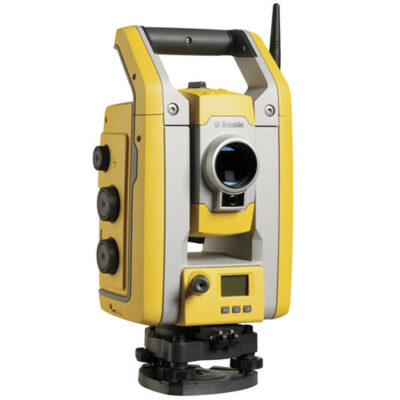
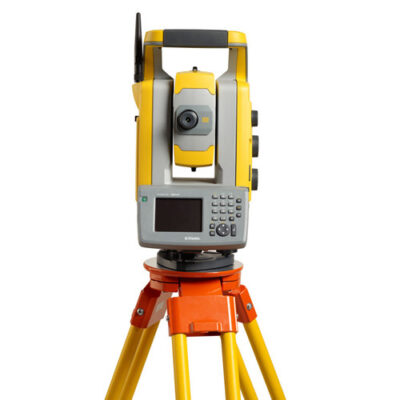
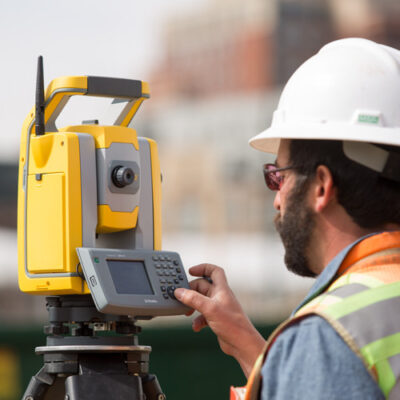
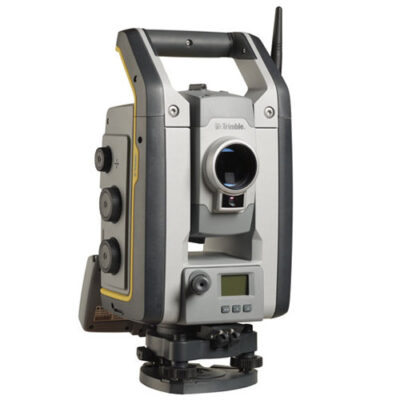
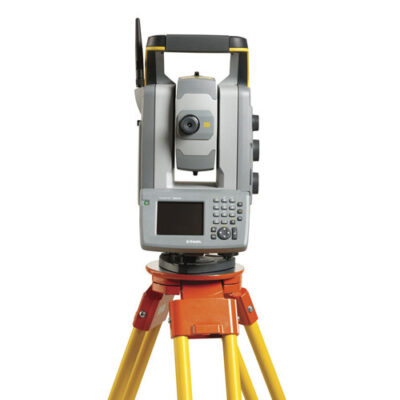
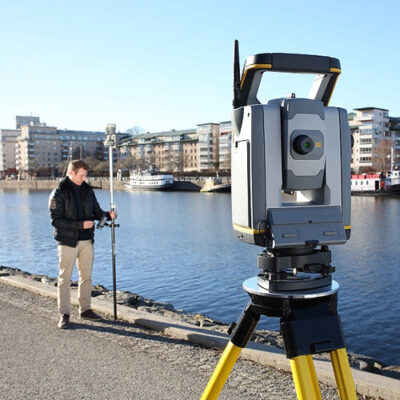
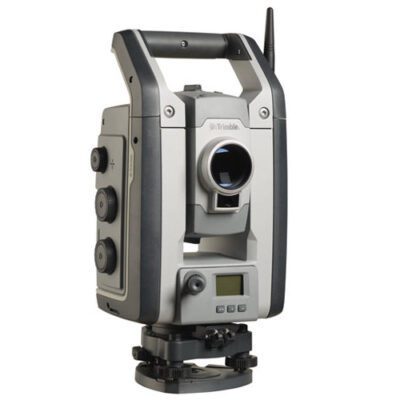
Field Handout • Trimble S, RTS & SPS-Series / Robotic Total Stations
Why it matters
Moving a robot/total station from a heated or air-conditioned job trailer into outdoor conditions can temporarily create temperature differences within the instrument. The EDM, optical system, compensator, and other components may not change temperature at the same rate. For the highest accuracy, allow the instrument to approach thermal equilibrium before precision measurements.
Practical acclimation guideline
| Temperature change | Suggested acclimation time |
|---|---|
| 5–10 °F (3–6 °C) | 15–30 minutes |
| 10–20 °F (6–11 °C) | 30–60 minutes |
| 20–30 °F (11–17 °C) | 60–90 minutes |
| 30 °F+ (17 °C+) | 1.5–2+ hours |
Field rule: For a substantial temperature change, allow about 60 minutes minimum before precision work.
For large changes or high-precision control, 90 minutes or longer is a better practice.
Field procedure
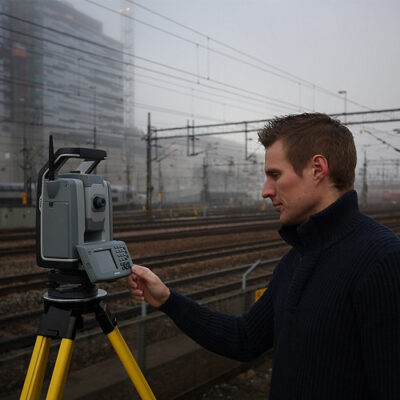
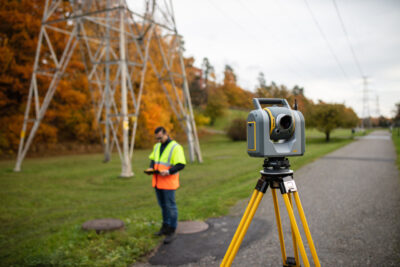
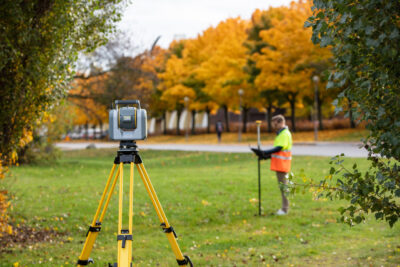
- Remove the instrument from the case and place it on the tripod.
- Keep it out of direct sunlight during acclimation whenever possible. Rapid solar heating can create uneven temperature gradients.
- Level the instrument and allow it to stabilize in the outdoor environment.
- Do not rush the setup. The larger the indoor/outdoor temperature difference, the longer stabilization should take.
- Recheck the setup after acclimation: level/compensator, backsight, orientation, and—when practical—a known control point.
Precision-work notes
- Acclimation is about more than the temperature of the outside housing; internal components can remain at different temperatures.
- Direct sunlight can heat one side of the instrument and produce temporary thermal gradients.
- Atmospheric conditions also affect EDM measurements. Temperature, pressure, humidity, and temperature gradients along the line of sight can influence measured distances even after the instrument itself has stabilized.
- For critical control, verify the setup against known control rather than assuming that a long warm-up alone guarantees accuracy.
Example
70 °F trailer → 40 °F outdoors = 30 °F change. For ordinary layout, conditions may permit a shorter period, but for precision control, plan for roughly 1.5–2 hours when practical, followed by setup and verification.
Key takeaway
When accuracy matters, give the robot time to become thermally stable. A practical minimum is about 60 minutes for a substantial temperature change; large changes and high-order work justify 90 minutes or more.
Support guideline—not a substitute for Trimble specifications, calibration procedures, or project accuracy requirements.